Friday, September 26
Latest Sohbet from Maulana
Sohbet/Sohba 23 Eylül/September 2008 - Seyh/Sheikh Muhammed Nazim El-Hakkani Hz. from .....~~Hakkani Post~~~..... on Vimeo.
Tuesday, September 23
Lailat Ul Qadr - Night of Power
LAILAT UL QADR-NIGHT OF POWER --- COMING SOON --- AVAIL IT
Assalaam Alaykum,
The opportunity of Laylatul Qadr is coming in the next few days. Life is about that take advantage of their opportunities to win the nearness & love of Allah, and this is indeed one of those chances. The sincere believer who worries day and night about his sins and phases of neglect in his life patiently awaits the onset of Ramadan. During it he hopes to be forgiven by Allah for past sins, knowing that the Prophet Sallallahu Alayhi wa sallam promised that all who bear down during the last ten days shall have all their sins forgiven. It is well known that Prophet Muhammad Sallallahu Alayhi wa Salama advised Muslims to search “Lailatuhul Qadr” in the odd numbered nights, in the last ten days of Ramadan.To achieve this, the believer remembers the Prophet’s Sallallahu Alayhi wa sallam advice in different sayings wherein he used words like “seek”, “pursue”, “search” and “look hard” for Laylatul Qadr. In this night of power, the Holy Quran was sent down from LOH-E-MEHFOOZ (the Preserved Tablet) to the earth.
Laylatul Qadr is the most blessed night. A person who misses it has indeed missed a great amount of good. The Mu’min should search for it in the last ten nights of Ramadan, passing the nights in worship and obedience.
For those who catch the opportunity, their gift is that of past sins wiped away.
The Messenger of Allah Sallallahu Alayhi wa sallam illustrated for us some of the things we should be doing on this Grand Night. From his blessed Sunnah we find the following:
It is recommended to make a long qiyaam prayer during the nights on which Laylatul Qadr could fall. This is indicated in many ahadeeth, such as:
“Whoever stands (in qiyaam) in Laylatul Qadr [and it is facilitated for him] out of faith and expectation (of Allah’s reward), will have all of his previous sins forgiven.” Al-Bukhari and Muslim.
Peace shall descend on Laylatul Qadr until the dawn.
Hazrat Aisha Radiallah Anha stated that Rasool Allah Sallallahu Alayhi wa Salma said, 'Look for Lailat-Ul-Qadr in the odd nights of the last ten days of Ramadhan.' (Bukhari)
Hazrat Aisha Radiallah Anha stated that as much Rasool Allah peace be upon him tried (Ibadat) in the last Ashra (ten days) of Ramadan, did not try in any of the Ashra.' (Muslim)
Hazrat Aisha Radiallah Anha stated that I asked Rasool Allah peace be upon him, 'If I find Lailatul Qadar then what should I do? HE peace be upon him said, recite this Dua.'ALLAH HUMMA INNAKA A’FUVUN TOHIB BUL AFVA FA’AFU ANNI' (Tirmidhi)
Please take advantage of this night, from sunset till sunrise. Offer nawafil (prayers), recite QUR'AAN, do repent (Istaghfar), and Pray for pardon, recite many many Salawat (Darood Sharif & Salaam) and make benediction (Dua'as).
SECRET TREASURE’S CALCULATIONS:
Arif-Billah Hadrat Khwaja Abul Hasan Kharkani (rahmatullah alahay) mentioned that he did not missed the Night of Power (Lail-a-tul Qadr) since his adolescence age based on the instruction/ quotations of Hadrat Imam Jafar Sadiq (rahmatullahi alaihi). According to him, the night of Power will be on the following:
· If first day of Ramadan starts on Monday, the night of Power
will be on 21st Ramadan.
· If first day of Ramadan starts on Saturday, the night of Power
will be on 23rd Ramadan.
· If first day of Ramadan starts on Thursday, the night of Power
will be on 25th Ramadan.
· If first day of Ramadan starts on Tuesday or Friday, the night
of Power will be 27th Ramadan.
· If first day of Ramadan starts on Wednesday or Sunday, the
night of Power will be on 29th Ramadan.
Moulana Abdul Hai Farangi Mahli (rahmatullah alahay) has also mentioned in his book that he has implemented the above mentioned dates and found them blessed with the Night of power.
---------------------------------------------------------------------------------
According to above calculations, 27th Night of Ramadhan-Ul-Mubarak should be night of Lailat-Ul-Qadr in India and Chicago and 21st Night should be night of Lailatur Qadr in Saudi Arabia.
----------------------------------------------------------------------------
This one night surpasses the value of 30,000 nights. If the Night of Power is for 12 hours, then each minute is equivalent to 42 days. The least action one can perform on the Night of Power is to pray Isha and Fajr in congregation. According to the Sunnah, the supplication to recite during the Night of Power is:
Special DU’AA of Lailatul QADR:
'ALLAH HUMMA INNAKA A’FUVUN TOHIB BUL AFVA FA’AFU ANNI' (Tirmidhi)
'O Allah! You are the Forgiver and You like forgiving so forgive me”
Alllah knows the just and best --- May Allah bless us the night of power – A’ameen.
Monday, September 22
Lion roaring Allah - Miracle of Islam
A video of a lion roaring Allah. "The lion makes short ablution and says the name of Allah! Thousand visitors of a zoo in city Baku became witnesses of this miracle. The inspector of the zoo said, that the Lion was brought from Iran in 1999."
Development of Soul results in Noble Characterstics
'Developing the soul' means cleansing it from stubborn mazmumah traits including miserliness, arrogance, troublemaking, greed, love of this world, resentment and so on so forth, replacing them instead with admirable mahmudah traits including generosity, humbleness, patience, kindness, love of the Hereafter and so on so forth.
Whoever wants to cleanse their heart and soul will gain the greatest reward in the Hereafter, which is Heaven. This was clearly stated by Allah in al-Quran:
Translated: "Truly victory will come to whoever cleanses (their heart/soul/nafs) and disappointment to whoever corrupts it." (As-Shams: 9-10)
Whoever has a soul that is clean from mazumah traits will be able to develop the world, whether from an economic, political, science and technology or administrative perspective, and such developments would be completely free from problems that usually occur in societies. The final result of their efforts would be that to the world would become a bridge to the Hereafter as Rasulullah SAW once said:
Translated: "The world is the plantation of the Hereafter."
This means that all efforts, activities, developments and civilisations that are raised in this world are like plantations whose products are to be enjoyed in the Hereafter. In Heaven awaits the pahala (rewards).
All developments and advancements that are carried out by people with clean souls are safe and are active in saving others. They would not have any undue side effects that would burden society in any way.
Once the soul has been processed and cleansed of all mazmumah traits, it becomes a home to noble characteristics. It is important to remember that developing the soul to such a stage is not an easy task. It is not enough for people to be provided with the right knowledge; the real effectiveness comes through personal education and daily practice. This is so that what has been learned will permeate into every part of the person's mind, soul, habits and behaviours until they have become part of the person themselves.
The act of obtaining knowledge is easy. We can go to classes, listen to mubaligh lecturers, read for ourselves, as well as listen to the radio and television, but in order to fully appreciate the knowledge and bring it into ourselves until it becomes part of our lives, that requires education, nurturing and continuous guidance. Knowledge on its own is inadequate, if there is no guidance to go along with it. The knowledge would be unfulfilled; just words on a page. It can be parroted back, used to beautify words and text, and even taught to others, but it would never reach the stage where it can become part of our culture and lifestyle.
When it comes to textual information, even non-Muslims can learn and use Islamic knowledge. In fact they can even go as far as to teach it others. In many current universities, especially in the West and America, a great deal of Islamic knowledge lecturers are non-Muslims, and many of their students are Muslims. These lecturers can present the knowledge, but cannot provide the right education and guidance.
In today's world, Islamic knowledge does not appear to be inadequate. There are many Islamic schools in the world ranging through all levels of education and increasing yearly. What is inadequate is the way that the knowledge is being taught; in some schools that do teach Islamic knowledge, the students are not being given the proper education and guidance. Some do not even practice congregational prayers.
Hence, while Islamic schools and the knowledge that they teach continue to expand, the actual practice and appreciation of knowledge remains stunted. The students of Islamic knowledge increase, but true Islamic characteristics are barely noticeable. The spreading of Islamic knowledge through dakwah and lectures are more widespread, but the application of that knowledge is even more limited. Nowadays, almost everyone talks about Islam whenever issues of social problems are brought up, but it's all talk and no action, as can be seen with the steady increase of social ills all over the world. This is because the educational system is still lacking. Although there are programs being implemented, they only focus on the physical aspect but not the spiritual one. These programs do not address the need to strengthen the tauhid of the heart and soul by empowering it with awareness of God along with feelings of humbleness, worthlessness, embarrassment and
lowliness before Him. When people are fully aware of God, they will avoid doing all bad things. Such a thing would be more effective than any rule or regulation. This is because a heart that is empowered with the fear of God above all others is the strongest armour against all vices.
It has been said:
Translated: "Fear Allah wherever you are, and follow up a bad deed with a good deed and it will wipe (the bad deed) out, and behave well towards people." (As related by Ahmad, Tarmizi and Baihaqi)
It is only when one fears God that their akhlak (behaviour/morals) will improve. This is what is meant by applying the knowledge of akidah or tauhid; tauhid belongs in the heart, not the head, and should never be limited to the tongue.
When it is said that the fear of Allah is more effective than any rule or regulation in avoiding the vices of the world, this does not mean that rules and regulations are not needed at all. They are needed, but they are not the primary means for dealing with social ills. Their role is to make the country's administration more organised and unified, as well as regulate and standardise between different ministries, branches, institutions, etc. Fear of Allah acts as the primary line of defense against all outside enemies. Other defenses are more temporary, for although they can help in the here and now, they cannot help in the long term.
That is how taqwa fortifies our spiritual armour against the attacks of the nafs (desires) and shai'tan (unseen beings) that are constantly trying to tempt us do to evil. But when taqwa is forgotten, the nafs and shai'tan run wild and free, dragging all willing souls into seen and unseen evil. It is during these times that rules and regulations become the approach that has to be taken in order to prevent crimes and misdoings.
So if anyone thinks that rules and regulations are the only way to prevent social ills, they would be wrong.
Laws, rules and regulations act as deterrents, but they do not guarantee the elimination of ill intent. It is more likely that there are many who are simply waiting for the right time to act, and have only not done so because they are afraid of being caught, along with all the worldly repercussions that would come along with being caught. As soon as the right opportunity comes along, and they are certain that they can avoid being caught, they would do what it is that they want. This is all the more possible in today's day and age, thanks to the advent of modern technology.
For example, if someone does not take bribes because they are afraid that the crime can be traced back to them, then the work that they do for others and the community would be safe and unaffected. But in Islam, their work would still be tainted because their actions are insincere. They would gain no pahala because they did not avoid the sin because they feared Allah, but because they feared other people. While on the surface they may appear good, they have actually sinned because they have committed shirik. The crime they would have committed was avoided only because of the existence of laws and their fear that they could be caught. But because their heart still does not fear Allah and the punishment of the Hereafter, they would still commit the crime against others if they get the chance.
Whoever wants to cleanse their heart and soul will gain the greatest reward in the Hereafter, which is Heaven. This was clearly stated by Allah in al-Quran:
Translated: "Truly victory will come to whoever cleanses (their heart/soul/nafs) and disappointment to whoever corrupts it." (As-Shams: 9-10)
Whoever has a soul that is clean from mazumah traits will be able to develop the world, whether from an economic, political, science and technology or administrative perspective, and such developments would be completely free from problems that usually occur in societies. The final result of their efforts would be that to the world would become a bridge to the Hereafter as Rasulullah SAW once said:
Translated: "The world is the plantation of the Hereafter."
This means that all efforts, activities, developments and civilisations that are raised in this world are like plantations whose products are to be enjoyed in the Hereafter. In Heaven awaits the pahala (rewards).
All developments and advancements that are carried out by people with clean souls are safe and are active in saving others. They would not have any undue side effects that would burden society in any way.
Once the soul has been processed and cleansed of all mazmumah traits, it becomes a home to noble characteristics. It is important to remember that developing the soul to such a stage is not an easy task. It is not enough for people to be provided with the right knowledge; the real effectiveness comes through personal education and daily practice. This is so that what has been learned will permeate into every part of the person's mind, soul, habits and behaviours until they have become part of the person themselves.
The act of obtaining knowledge is easy. We can go to classes, listen to mubaligh lecturers, read for ourselves, as well as listen to the radio and television, but in order to fully appreciate the knowledge and bring it into ourselves until it becomes part of our lives, that requires education, nurturing and continuous guidance. Knowledge on its own is inadequate, if there is no guidance to go along with it. The knowledge would be unfulfilled; just words on a page. It can be parroted back, used to beautify words and text, and even taught to others, but it would never reach the stage where it can become part of our culture and lifestyle.
When it comes to textual information, even non-Muslims can learn and use Islamic knowledge. In fact they can even go as far as to teach it others. In many current universities, especially in the West and America, a great deal of Islamic knowledge lecturers are non-Muslims, and many of their students are Muslims. These lecturers can present the knowledge, but cannot provide the right education and guidance.
In today's world, Islamic knowledge does not appear to be inadequate. There are many Islamic schools in the world ranging through all levels of education and increasing yearly. What is inadequate is the way that the knowledge is being taught; in some schools that do teach Islamic knowledge, the students are not being given the proper education and guidance. Some do not even practice congregational prayers.
Hence, while Islamic schools and the knowledge that they teach continue to expand, the actual practice and appreciation of knowledge remains stunted. The students of Islamic knowledge increase, but true Islamic characteristics are barely noticeable. The spreading of Islamic knowledge through dakwah and lectures are more widespread, but the application of that knowledge is even more limited. Nowadays, almost everyone talks about Islam whenever issues of social problems are brought up, but it's all talk and no action, as can be seen with the steady increase of social ills all over the world. This is because the educational system is still lacking. Although there are programs being implemented, they only focus on the physical aspect but not the spiritual one. These programs do not address the need to strengthen the tauhid of the heart and soul by empowering it with awareness of God along with feelings of humbleness, worthlessness, embarrassment and
lowliness before Him. When people are fully aware of God, they will avoid doing all bad things. Such a thing would be more effective than any rule or regulation. This is because a heart that is empowered with the fear of God above all others is the strongest armour against all vices.
It has been said:
Translated: "Fear Allah wherever you are, and follow up a bad deed with a good deed and it will wipe (the bad deed) out, and behave well towards people." (As related by Ahmad, Tarmizi and Baihaqi)
It is only when one fears God that their akhlak (behaviour/morals) will improve. This is what is meant by applying the knowledge of akidah or tauhid; tauhid belongs in the heart, not the head, and should never be limited to the tongue.
When it is said that the fear of Allah is more effective than any rule or regulation in avoiding the vices of the world, this does not mean that rules and regulations are not needed at all. They are needed, but they are not the primary means for dealing with social ills. Their role is to make the country's administration more organised and unified, as well as regulate and standardise between different ministries, branches, institutions, etc. Fear of Allah acts as the primary line of defense against all outside enemies. Other defenses are more temporary, for although they can help in the here and now, they cannot help in the long term.
That is how taqwa fortifies our spiritual armour against the attacks of the nafs (desires) and shai'tan (unseen beings) that are constantly trying to tempt us do to evil. But when taqwa is forgotten, the nafs and shai'tan run wild and free, dragging all willing souls into seen and unseen evil. It is during these times that rules and regulations become the approach that has to be taken in order to prevent crimes and misdoings.
So if anyone thinks that rules and regulations are the only way to prevent social ills, they would be wrong.
Laws, rules and regulations act as deterrents, but they do not guarantee the elimination of ill intent. It is more likely that there are many who are simply waiting for the right time to act, and have only not done so because they are afraid of being caught, along with all the worldly repercussions that would come along with being caught. As soon as the right opportunity comes along, and they are certain that they can avoid being caught, they would do what it is that they want. This is all the more possible in today's day and age, thanks to the advent of modern technology.
For example, if someone does not take bribes because they are afraid that the crime can be traced back to them, then the work that they do for others and the community would be safe and unaffected. But in Islam, their work would still be tainted because their actions are insincere. They would gain no pahala because they did not avoid the sin because they feared Allah, but because they feared other people. While on the surface they may appear good, they have actually sinned because they have committed shirik. The crime they would have committed was avoided only because of the existence of laws and their fear that they could be caught. But because their heart still does not fear Allah and the punishment of the Hereafter, they would still commit the crime against others if they get the chance.
Thursday, September 18
Loving Allah
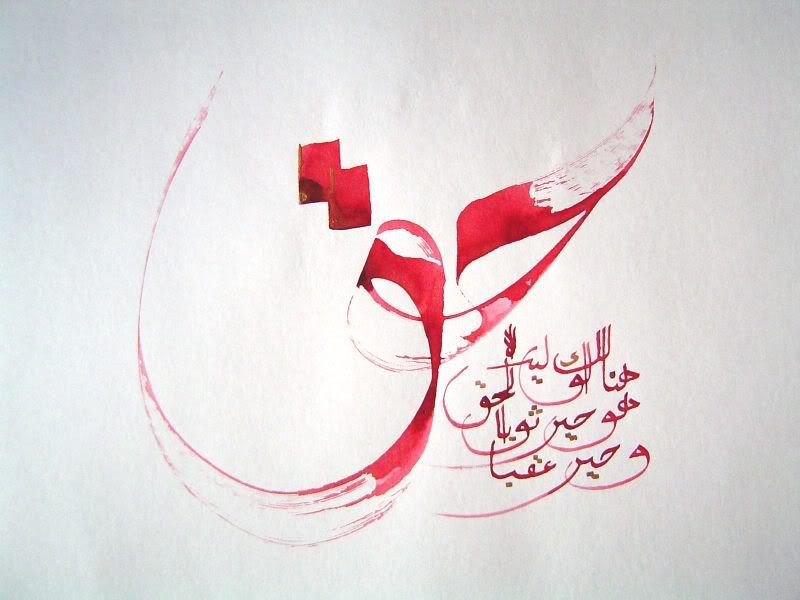
Without loving Allah, you cannot be a professional worshiper of Allah. Those who really love what they do, succeed in their work.
A teacher, who loves to teach, succeeds in teaching more than a teacher who teaches for money. A chef, who loves to cook, succeeds more than a chef who does not like their job.
Applying the same logic, only a person who genuinely loves Allah is equipped to worship Him wholeheartedly. It is impossible to worship that which you know not and love not. Worship and love are intimately related.
The highest level of love is worship and love is the foundation and essence of godly living. True and genuine worship of Allah does not take place except through loving Him.
Allah’s Messenger said, “None of you believes until I am more beloved to him than his family, wealth and all the people.”
If the authenticity of your belief is conditional upon loving Allah’s messenger more than anything else, then the obvious reality is that one does not even smell the fragrance of faith until they love Allah more than anything else individually and collectively.
Our love to Allah is the very foundation of our faith. Since, love is as good as the entity in which it is placed, achieving close to perfect faith is directly related to the perfection of the beloved.
Allah’s perfection infinitely exceeds our perception of perfection. He is free from any deficiency and all his attributes are occasion for praise. Thus, those who know Him, love Him more than they love anyone and anything else. Therefore, they freely submit themselves to Him, not because they have to, but because they love to; they love it and enjoy it.
Worship is the submission and subordination internally and externally to the beloved Lord out of love and adoration.
You and I psychologically are neither willing nor able to subordinate or submit ourselves, both internally and externally in all conditions except through worshipful love. Hence, this love must be dispensed only to Allah. This type of love provides the long term impetus for worship and service. Love without subordination and servitude is not worshipful love.
Without love, subordination and servitude do not constitute worship. However, when love is coupled with servitude, humility, submission, subordination, adoration and veneration, the result of combining these attitudes of faith is true and genuine worship. This love-based submission brings about liberation from worldly control.
Love and Servitude
Man cannot experience peace and tranquility without knowing his Maker. When man knows his Lord and understands his intended relationship to Him, he falls in love with Him. Allah is not distant or hard to get to know. He is neither mysterious nor capricious, but rather evident in the world around us and in us and easy to know. When man knows his Lord not, he fails to love Him. Certain destruction is indeed the result of man not truly loving his Lord and acknowledging his subservience to Him.
Full love and servitude are suitable only to Allah (Jehovah). “Love your Lord with all your heart” (Mk 12:30). Loving Allah produces servitude and submission all the time and in all places internally and externally. Loving Allah is the emotion that puts lovers in motion, starts them on the path of devotion, eases for them difficulties, shortens for them otherwise long distances and relieves hardships as the sweetness of love offsets the bitterness of difficulties. When you are love-borne, you can cover the distance to come closer to Allah faster and easier. A poet has said,
My religion is love
This is my religion
There is no compulsion in the religion
The one whose religion is dislike moves as if dragging his feet in the mud
The one passionate for his religion advances
The one who is passionless slacks.
Excerpt taken from Radwan's upcoming book "Live Your Life On Purpose".
Emailed to the blogger by Mastura
Wednesday, September 17
Let's Sharpen the Language of Our Hearts!
Let's Sharpen the Language of Our Hearts!
The heart speaks through feeling and emotions,
The mind speaks through thinking and thoughts,
The desires (nafs) speak through numerous yearnings and aspirations,
The eyes speaks through shapes and colours,
The tongue speaks through words and conversation,
The body speaks through touch and contact,
Let us speak through our hearts and be cultured,
Let us refine our hearts and souls,
Let our hearts and souls be the language experts,
That is the way it should be, for the heart is the ruler within us,
The ruler has the final say,
The ruler has the lawful authority,
The rest of the body should be obedient subjects,
To become subjects serving the king,
To become loyal soldiers,
If human beings are capable of accomplishing all this,
Life's journey would be beautiful and meaningful,
Everything is for God,
Befitting God's reason as to why mankind exists,
To give ourselves to Allah and be His Caliph.
By,
Shaikhul Islam Abuya Ashaari Bin Muhammad Attamimi AlHashimi
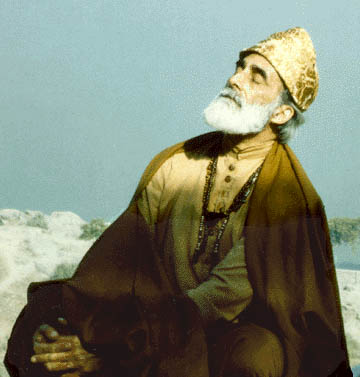
Pictured above: Pir Vilyat Khan, in meditation. Ajmer, India, Circa 1979.
Tuesday, September 16

Monday, September 15
Open the door of the heart
Shaykh Sa'adi Shirazi writes in his famous book "Gulistan" that in his child hood he developed a love for worship and used to offer prayers during the night. One night, he was praying with his father and other people in the house were enjoying sleep. He said to his father, "Why don't these people wake up and offer two rak'ats nafil prayer instead of laying there like dead people?" His father said, "My son, it would have been better for you to sleep all night than this worship that you are doing, because you are involving yourself in backbiting.
Moral: "The humorist sees himself with his own eyes and thinks very highly of himself , open the door of the heart and you will find yourself lowest of all."
We see that even great scholars never hesitate to introspect and correct themselves and ask for forgiveness from Allah Subhanahu wa Ta'ala but nowadays! We see a majority of people who boast about their worship and consider others low for not worshipping as they do. Actually they do not inspire others for worship, rather they offend others and send them away from worship due to their arrogance. Such people appreciate themselves and keep on depreciating others and their apparent piety fails to spread dignity at all. You know, such attitude shows that we are caught by the paws of desires and do not think about any others but ourselves. May Allah Subhanahu wa Ta'ala save us from the crippling cage of desires. Ameen.
Please share your views and comments with us
Moral: "The humorist sees himself with his own eyes and thinks very highly of himself , open the door of the heart and you will find yourself lowest of all."
We see that even great scholars never hesitate to introspect and correct themselves and ask for forgiveness from Allah Subhanahu wa Ta'ala but nowadays! We see a majority of people who boast about their worship and consider others low for not worshipping as they do. Actually they do not inspire others for worship, rather they offend others and send them away from worship due to their arrogance. Such people appreciate themselves and keep on depreciating others and their apparent piety fails to spread dignity at all. You know, such attitude shows that we are caught by the paws of desires and do not think about any others but ourselves. May Allah Subhanahu wa Ta'ala save us from the crippling cage of desires. Ameen.
Please share your views and comments with us
Saturday, September 13
Ali's Sayings
A true believer is one whose face wears a smile
even though his heart is distressed.
When you succeed do not feel proud.
When you fail do not lose patience.
He who seeks the world, death runs after him;
he who seeks the hereafter, the world runs after him.
Speech is like medicine, a small dose of which cures,
and an excess of which kills.
Forgiveness is the zakaat of success.
If you wish to succeed in life, learn to forgive others.
Thursday, September 11
Have Faith
Persevere, have faith in His benevolence.
Through afflictions God only tests your faith;
He is completely aware of your condition.
Have patience and wait for the divine decree.
Do not become like the foolish laborer
who is removed from the king's palace
for demanding his wages ahead of time.
-Sheikh Abdul Qadir Jillani
Through afflictions God only tests your faith;
He is completely aware of your condition.
Have patience and wait for the divine decree.
Do not become like the foolish laborer
who is removed from the king's palace
for demanding his wages ahead of time.
-Sheikh Abdul Qadir Jillani
Greatness of the Heart
Assalamu 'Alaykum wa Rahmatullahi wa Barakatuhu
And if anyone believes in Allah, (Allah) guides his heart (aright)' (64:11).
The guidance of the heart is the basis of all guidance, the law of all success, the origin of every deed and head of every action. The Prophet(pbuh) said:
'Truly there is a piece of flesh in the body which, if it be wholesome, the whole body will be healthy and which, and if it be diseased the whole body will be diseased. Truly it is the heart.'
Thus the goodness of your heart is the guarantee of your happiness in this world and in the hereafter. Likewise, its corruption is the surest way to destruction, the extent of which only Allah knows.
'In this, behold, there is indeed a reminder for everyone whose heart is wide-awake - that is [everyone who] lends ear with a conscious mind' (50:37).
Every creature has a heart. In reality though they are two hearts, a heart that is alive and pulsating with the light of faith. It is filled with intense conviction and God-consciousness. The other is a dead heart, covered and diseased with every wreckage and rubbish.
Allah Almighty says concerning the hearts of the foolish folk:
'In their hearts is disease, and so God lets their disease increase' (2:10).
'But they say, "Our hearts are already full of knowledge." Nay, but God has rejected them because of their refusal to acknowledge the truth: for, few are the things in which they believe' (2:88).
Allah also says:
'Will they not, then, ponder over this Quran? - or are there locks upon their hearts?' (47:24).
'And so they say, [as it were:] "Our hearts are veiled from whatever thou callest us to, [O Muhammad,] and in our ears is deafness"' (41:5).
From all these verses we learn that the hearts can become ill, they can be covered, locked and they die. The enemies of Allah have hearts in their bosoms but they do not perceive with these hearts. Hence the Prophet saws used to say:
'O dispenser of hearts make my heart firm in Your religion.'
The heart of the believer fasts during Ramadan and outside of Ramadan. The fasting of the heart is done by emptying it of all corrupt material such as destructive forms of polytheism, false beliefs, evil suggestions, filthy intentions and degenerate thoughts. The heart of the believer is adorned with the love of Allah. It knows its Lord by His names and His qualities as He has described Himself. This heart explores with a discerning eye the lines of His names and qualities and the pages of Allah's making in the universe and the books of His creations.
The believer's heart is filled with a brilliant light which does not allow any darkness to remain with it. It is the light of the eternal message, the divine teachings, and the omnipotent laws. To it is added the natural light upon which the servants of Allah were created. Thus two great lights come together.
'Light upon light! God guides unto His light him that wills [to be guided]; and [to this end] God propounds parables unto men, since God [alone] has full knowledge of all things' (24:36).
The believer's heart glows like a lamp, shines like the sun and sparkles like the morning light. It increases in faith whenever the believer listens to the verses of the Quran, it grows in conviction when it contemplates, and increases in guidance when it reflects. The believer's heart abstains from pride because it breaks its fast. Pride does not reside in the heart of a believer because it is unlawful. The abode and dwelling place of pride is the heart. Hence, if it enters any heart, that person will become afflicted, foolish, arrogant and frivolous.
Allah Almighty says in a hadith Qudsi: 'Pride is my upper garment and grandeur is my lower one, whoever contests with me for them I will punish him.'
The Prophet(pbuh) himself said:
'Whoever shows arrogance to Allah, He will humble him, and whoever is humble to Allah, He will raise him in station.'
The heart of the believer fasts and abstains from egotism. Egotism is when the individual sees himself as perfect, better than others and in possession of good qualities that are not found in anyone else. This is destruction in its most naked form. The Prophet(pbuh) said:
'Three things which are totally destructive: a person's self-centredness and conceit, his reluctance to obey and his following of his desires.'
The cure for this self-importance is to look at one's own faults, one's many shortcomings, thousands of sins and misdeeds that one has committed, wrongs that one has done and forgotten but the knowledge of which are with Allah in a book. For Allah is not led astray nor does He forget.
The heart of the believer fasts and abstains from envy because it lowers righteous deeds, puts out the light of the heart and stops its progress toward Allah the Most High. Allah says in the Glorious Quran:
'Do they, perchance, envy other people for what God has granted them out of his bounty? (4:54).
And the Prophet(pbuh) said:
'Do not envy one another; do not inflate prices one to another; do not hate one another; do not turn away from one another; and do not undercut one another.'
The Prophet(pbuh) informed one of his companions three times that he would be among the people of Paradise. When he was asked about what was it that earned him a place in Paradise, the man said:
'I do not sleep with envy, grudge or deceit in my heart for any Muslim.'
Are there any hearts that would, therefore, fast like the learned. The fast of the learned has a yearning for the Most Merciful Lord of the worlds. Their hearts fast at all times and in the early hours of morning they seek forgiveness.
O Allah guide our hearts to the straight path and make it firm on faith, O Lord of the worlds
And if anyone believes in Allah, (Allah) guides his heart (aright)' (64:11).
The guidance of the heart is the basis of all guidance, the law of all success, the origin of every deed and head of every action. The Prophet(pbuh) said:
'Truly there is a piece of flesh in the body which, if it be wholesome, the whole body will be healthy and which, and if it be diseased the whole body will be diseased. Truly it is the heart.'
Thus the goodness of your heart is the guarantee of your happiness in this world and in the hereafter. Likewise, its corruption is the surest way to destruction, the extent of which only Allah knows.
'In this, behold, there is indeed a reminder for everyone whose heart is wide-awake - that is [everyone who] lends ear with a conscious mind' (50:37).
Every creature has a heart. In reality though they are two hearts, a heart that is alive and pulsating with the light of faith. It is filled with intense conviction and God-consciousness. The other is a dead heart, covered and diseased with every wreckage and rubbish.
Allah Almighty says concerning the hearts of the foolish folk:
'In their hearts is disease, and so God lets their disease increase' (2:10).
'But they say, "Our hearts are already full of knowledge." Nay, but God has rejected them because of their refusal to acknowledge the truth: for, few are the things in which they believe' (2:88).
Allah also says:
'Will they not, then, ponder over this Quran? - or are there locks upon their hearts?' (47:24).
'And so they say, [as it were:] "Our hearts are veiled from whatever thou callest us to, [O Muhammad,] and in our ears is deafness"' (41:5).
From all these verses we learn that the hearts can become ill, they can be covered, locked and they die. The enemies of Allah have hearts in their bosoms but they do not perceive with these hearts. Hence the Prophet saws used to say:
'O dispenser of hearts make my heart firm in Your religion.'
The heart of the believer fasts during Ramadan and outside of Ramadan. The fasting of the heart is done by emptying it of all corrupt material such as destructive forms of polytheism, false beliefs, evil suggestions, filthy intentions and degenerate thoughts. The heart of the believer is adorned with the love of Allah. It knows its Lord by His names and His qualities as He has described Himself. This heart explores with a discerning eye the lines of His names and qualities and the pages of Allah's making in the universe and the books of His creations.
The believer's heart is filled with a brilliant light which does not allow any darkness to remain with it. It is the light of the eternal message, the divine teachings, and the omnipotent laws. To it is added the natural light upon which the servants of Allah were created. Thus two great lights come together.
'Light upon light! God guides unto His light him that wills [to be guided]; and [to this end] God propounds parables unto men, since God [alone] has full knowledge of all things' (24:36).
The believer's heart glows like a lamp, shines like the sun and sparkles like the morning light. It increases in faith whenever the believer listens to the verses of the Quran, it grows in conviction when it contemplates, and increases in guidance when it reflects. The believer's heart abstains from pride because it breaks its fast. Pride does not reside in the heart of a believer because it is unlawful. The abode and dwelling place of pride is the heart. Hence, if it enters any heart, that person will become afflicted, foolish, arrogant and frivolous.
Allah Almighty says in a hadith Qudsi: 'Pride is my upper garment and grandeur is my lower one, whoever contests with me for them I will punish him.'
The Prophet(pbuh) himself said:
'Whoever shows arrogance to Allah, He will humble him, and whoever is humble to Allah, He will raise him in station.'
The heart of the believer fasts and abstains from egotism. Egotism is when the individual sees himself as perfect, better than others and in possession of good qualities that are not found in anyone else. This is destruction in its most naked form. The Prophet(pbuh) said:
'Three things which are totally destructive: a person's self-centredness and conceit, his reluctance to obey and his following of his desires.'
The cure for this self-importance is to look at one's own faults, one's many shortcomings, thousands of sins and misdeeds that one has committed, wrongs that one has done and forgotten but the knowledge of which are with Allah in a book. For Allah is not led astray nor does He forget.
The heart of the believer fasts and abstains from envy because it lowers righteous deeds, puts out the light of the heart and stops its progress toward Allah the Most High. Allah says in the Glorious Quran:
'Do they, perchance, envy other people for what God has granted them out of his bounty? (4:54).
And the Prophet(pbuh) said:
'Do not envy one another; do not inflate prices one to another; do not hate one another; do not turn away from one another; and do not undercut one another.'
The Prophet(pbuh) informed one of his companions three times that he would be among the people of Paradise. When he was asked about what was it that earned him a place in Paradise, the man said:
'I do not sleep with envy, grudge or deceit in my heart for any Muslim.'
Are there any hearts that would, therefore, fast like the learned. The fast of the learned has a yearning for the Most Merciful Lord of the worlds. Their hearts fast at all times and in the early hours of morning they seek forgiveness.
O Allah guide our hearts to the straight path and make it firm on faith, O Lord of the worlds
Sunday, September 7
Humility
Humility is not the trait of thinking of self as being of less worth. Humility is not thinking of self at all, whether good or bad. Humility is thinking of others and seeking their advancement...Stop considering your humility and use your energies and confidence to help others.Something to think about during Ramadan.
Thursday, September 4
Fasting by Rumi
There's hidden sweetness in the stomach's emptiness.
We are lutes, no more, no less. If the soundbox
is stuffed full of anything, no music.
If the brain and belly are burning clean
with fasting, every moment a new song comes out of the fire.
The fog clears, and new energy makes you
run up the steps in front of you.
Be emptier and cry like reed instruments cry.
Emptier, write secrets with the reed pen.
When you're full of food and drink, Satan sits
where your spirit should, an ugly metal statue
in place of the Kaaba. When you fast,
good habits gather like friends who want to help.
Fasting is Solomon's ring. Don't give it
to some illusion and lose your power,
but even if you have, if you've lost all will and control,
they come back when you fast, like soldiers appearing
out of the ground, pennants flying above them.
A table descends to your tents,
Jesus' table.
Expect to see it, when you fast, this table
spread with other food, better than the broth of cabbages.
~ Mawlana Jalaluddin Rumi (R.A)
We are lutes, no more, no less. If the soundbox
is stuffed full of anything, no music.
If the brain and belly are burning clean
with fasting, every moment a new song comes out of the fire.
The fog clears, and new energy makes you
run up the steps in front of you.
Be emptier and cry like reed instruments cry.
Emptier, write secrets with the reed pen.
When you're full of food and drink, Satan sits
where your spirit should, an ugly metal statue
in place of the Kaaba. When you fast,
good habits gather like friends who want to help.
Fasting is Solomon's ring. Don't give it
to some illusion and lose your power,
but even if you have, if you've lost all will and control,
they come back when you fast, like soldiers appearing
out of the ground, pennants flying above them.
A table descends to your tents,
Jesus' table.
Expect to see it, when you fast, this table
spread with other food, better than the broth of cabbages.
~ Mawlana Jalaluddin Rumi (R.A)
Wednesday, August 27
Allah won't ask! Live Islam, Love Life
1. Allah won't ask what kind of car you drove, but will ask how many people you drove who didn't have transportation.
2. Allah won't ask what your highest salary was, but will ask if you compromised your character or morals to obtain that salary.
3. Allah won't ask the square footage of your house, but will ask how many people you welcomed into your home.
4. Allah won't ask about the fancy clothes you had in your closet, but will ask how many of those clothes helped the needy.
5 Allah won't ask about your social status, but will ask what kind of class you displayed.
6. Allah won't ask how many material possessions you had, but will ask if they dictated your life.
7. Allah won't ask how much overtime you worked, but will ask if you worked overtime for your family and loved ones.
8. Allah won't ask how many promotions you received, but will ask how you promoted others.
9. Allah won't ask what your job title was, but will ask if you performed your job to the best of your ability.
10. Allah won't ask what you did to help yourself, but will ask what you did to help others.
11. Allah won't ask how many friends you had, but will ask how many people to whom you were a true friend.
12. Allah won't ask what you did to protect your rights, but will ask what you did to protect the rights of others.
13. Allah won't ask in what neighborhood you lived, but will ask how you treated your neighbors.
14. Allah won't ask about the color of your skin, but will ask about the content of your character.
15. Allah won't ask how many times your deeds matched your words, but will ask how many times they didn't.
Courtesy: http://www.everymuslim.net
2. Allah won't ask what your highest salary was, but will ask if you compromised your character or morals to obtain that salary.
3. Allah won't ask the square footage of your house, but will ask how many people you welcomed into your home.
4. Allah won't ask about the fancy clothes you had in your closet, but will ask how many of those clothes helped the needy.
5 Allah won't ask about your social status, but will ask what kind of class you displayed.
6. Allah won't ask how many material possessions you had, but will ask if they dictated your life.
7. Allah won't ask how much overtime you worked, but will ask if you worked overtime for your family and loved ones.
8. Allah won't ask how many promotions you received, but will ask how you promoted others.
9. Allah won't ask what your job title was, but will ask if you performed your job to the best of your ability.
10. Allah won't ask what you did to help yourself, but will ask what you did to help others.
11. Allah won't ask how many friends you had, but will ask how many people to whom you were a true friend.
12. Allah won't ask what you did to protect your rights, but will ask what you did to protect the rights of others.
13. Allah won't ask in what neighborhood you lived, but will ask how you treated your neighbors.
14. Allah won't ask about the color of your skin, but will ask about the content of your character.
15. Allah won't ask how many times your deeds matched your words, but will ask how many times they didn't.
Courtesy: http://www.everymuslim.net
Saturday, August 23
The Elephant Story

Here’s something hypothetical. Read it first and then close your eyes and see the hilarity of the whole thing.
Imagine there is this big hall which is pitch dark. Imagine the darkness to be so dark that you can’t see a thing. And inside this hall imagine an elephant. Imagine many doors to this room and all doors are closed. Imagine a group of people trying to analyse the elephant. Imagine all these people knowing the elephant for itself but understanding only a certain part of the body to be the true representative of the elephant.
So when one enters the room and knows only the tail, he would go feeling all the parts until he finds the tail. Once he has found the tail, he is happy and keeps feeling the tail and only the tail and tells himself that `this is the elephant’. Familiarity and solace he has found in the tail! He would know the tail so intimately but he can only acknowledge the tail and tail only as a representation of the elephant. Then there are the other guys who would do the same with the head, the legs, the whole body, the trunk, the tusk. Imagine all these people feeling the elephant; each one feeling with great love and reverence, the part known only to him as the `the elephant’.
That the elephant might be made up of all the parts together is not witnessed or observed. Because they might have to accept the other parts of the elephant if they witness or observe it, their preference to stick to the known part is a proper way for each of them. So only the part that is familiar to them would do. None of these people saw or want to see the elephant as a whole for fear they might lose their belief in the part they believe in! None of them want to acknowledge the elephant as one unit but rather they compartmentalise their beliefs. They find comfort in these little compartments.
So when the time came to acknowledge the elephant as a whole, all the representatives of the respective parts began to fight with each other wanting to prove that their part of the elephant is the true representative and all the while the elephant as a whole stood straight, for all to see oblivious to the commotion that was being created for it knew it was ‘the’ elephant, period. Imagine all the representatives pitching against each other to prove their respective part is superior to the other and therefore is the elephant.
Just like the elephant story, Islam is being compartmentalised these days. I think we have 72 sects or so in existence! Sure, each of these sects acknowledge Allah and the Prophet (SAW) but in their own style and rhythm. Muslims are losing focus of the true preaching of Allah and the Prophet. And we Sufis are losing that lovely Sufi spirit. And that’s a shame.
Aren’t we supposed to be wise, learned, perceptive, intelligent, clever, prudent, sensible judicious? Aren’t we meant to be cheerful, happy, jolly, joyful, lively and always in good spirits and aren’t we meant to be charming, enchanting, captivating, attractive? Aren’t we supposed to be loveable dreamers of Islam? Haven’t Sufis been influential in spreading Islam around the world for the past many centuries? I am sure the Sufi saints did not shrug off non-believers and banish them to hell in the process. Our dear Prophet (pbh) is a prime and solid example of this and so were his Sahabas. Sheik Nazim is living proof of this can-do, can-be attitude. They have given us the way and all we need to do is to follow the path.
What are we waiting for?
Salams
Soraya Usuf
Love - Shaykh Nazim Sohbet
European people are writing, "Love, love." everywhere, - "Love". It means that it is the most important thing for them. But they are not asking for real Love, and how they can reach to that endless Love oceans.
Everyone's soul is asking to reach endless beauty oceans.
You can reach out to the love of your Lord through your wife, And she can reach it through you ---- Because we are asking through her love The real Love of ALLAH Almighty. And it is the most perfect teaching for mankind
To make a relationship from that love and to jump to your Lord's Love.
But people are not taking enough care about that love and not allowing the Divine Love Springs to come out from their hearts. - They are running after some imitation love, for a temporary love that is only coming and going for some occasions, - coming and giving people that love which belongs to our physical desires. It is only temporary and is quickly disappearing, and the quickly arriving satisfaction is going to be less and less, and then it is finishing. .. commonly the interest of mankind is going to be for that love which is going to be less and less and less, and then finishing. Drying up. Physical desires love is going to be less and less and finally to be dry. (ST26)
You may love a young lady for her youth, and when that youth departs you love her no more. That is false love. Sometimes we may have both kinds of love simultaneously, but usually the physical overpowers the spiritual so that it is never allowed to appear. But to reach the ultimate goal of human life we are in need of permanent love, and it is only the Lord of the universe Who can grant it.
But Divine love, that is settled and based through the hearts of mankind. It is not becoming less. As long as you are looking after it, you should find it increasing, giving more, and being more tasteful, and finding it never ending.
This is because your physical being is going to finish, but your real being is never going to finish. Your physical being is a temporary being, but your spiritual being is a permanent one. Therefore that which belongs to your physical being from love is going to finish. But that which belongs to your spiritual being is never ending, is permanent.
You are free to choose between the two. And you are free to look for the one or the other as you like. If you like it to finish, then follow your physical desires and their love. If you are interested in Eternal Love. Everlasting love, then look after your spiritual love - Are you doing so?
When you increase in the love of the permanent life, the eternal life, then ALLAH Almighty gives to your heart from His Divine Lights, and darkness goes away; because the more the love of this life gets into your heart, the more darkness gets in also. In darkness all bad thoughts and fears grow, and dissatisfactions and unhappiness grow in your heart because darkness makes them grow. But if darkness goes away from our heart, then it is lighted everywhere. No more trouble or unhappiness can be in your heart. Lights, divine lights give you satisfaction and peace, and as much as those lights grow in your heart so much peace and happiness and satisfaction will grow in our heart, and hope will grow each day.
Shaykh Nazim
Sunday, August 17
Wednesday, August 13
Pursuit of True Happiness
We must remind ourselves as well...that, neither the heart or soul reside in the mind. Nor can they be properly understood by the intellect.
There was once a story of a man crying on the side of a road, praying to find true happiness. When God sent an old man to inquire of him the reason for such tears, he replied that he was lost and that his life had been wasted in the pursuit of true happiness. The old man asked him to describe the shape, size and dimensions of these objects so desired and that perhaps, he might be able to help him to find them.
The man answered that this was the very problem. He did not know how to describe them, to which the old man replied; at least now, we know why you are lost.
The moral of the story is that many of us are like this man, pursue our fancies through a veneer of sophisticated ideas, arguments and imaginings through veils of uncertainty. But, if we take the time, stop and listen to our heart and ask sincerely - every cloud will part and guidance becomes evident.
Allah Razy Olsun,
-Abdullah Serif
There was once a story of a man crying on the side of a road, praying to find true happiness. When God sent an old man to inquire of him the reason for such tears, he replied that he was lost and that his life had been wasted in the pursuit of true happiness. The old man asked him to describe the shape, size and dimensions of these objects so desired and that perhaps, he might be able to help him to find them.
The man answered that this was the very problem. He did not know how to describe them, to which the old man replied; at least now, we know why you are lost.
The moral of the story is that many of us are like this man, pursue our fancies through a veneer of sophisticated ideas, arguments and imaginings through veils of uncertainty. But, if we take the time, stop and listen to our heart and ask sincerely - every cloud will part and guidance becomes evident.
Allah Razy Olsun,
-Abdullah Serif
Thursday, August 7
This shall too pass
Once upon a time, a great Shah of Persia decided to have a special jewel encrusted ring made for his personal use. On the ring, he wanted to engrave a few words which would give him great comfort in times of distress. He offered huge rewards for anyone who could suggest the best words of wisdom to him for his purpose.
Many people came forward, but none of their words where to the Kings liking.
Then a dervish visited the palace and said..."Oh King! Let me tell you of the words that have always given me great comfort in my time of distress and sorrow"
He told the King.. the words touched the him so much he head them engraved on his ring and would always look at them when he felt sad or experienced difficulty...and immediately his heart would be filled with a new spirit of patience courage and faith....
Those words..... "This too shall pass"
Many people came forward, but none of their words where to the Kings liking.
Then a dervish visited the palace and said..."Oh King! Let me tell you of the words that have always given me great comfort in my time of distress and sorrow"
He told the King.. the words touched the him so much he head them engraved on his ring and would always look at them when he felt sad or experienced difficulty...and immediately his heart would be filled with a new spirit of patience courage and faith....
Those words..... "This too shall pass"
Tuesday, August 5
Grief
Grief clouds thought and reason, and harms both the soul and the body; so you should repel it, or reduce it as much as possible. This can be done in two ways: you can strive to prevent grief from occurring; and you can banish grief when it does occur.
-Razi: Kitab al-Muluki
-Razi: Kitab al-Muluki
Monday, August 4
Perseverance
If you persevere in adversity and depend on God, then know that He will remove your afflictions and bestow vast blessings upon you. For in His Book God promises, "Those who depend upon Allah, Allah bestows His bounty upon them and provides for them from means unknown." Therefore follow the road of patience and rejoice in His infinite bounty.
Sheikh Abdul Qadir Jillani
Sheikh Abdul Qadir Jillani
Monday, July 28
Purpose of Human Existence
The basic purpose of human existence is acquisition of knowledge of God; there is no relationship more true than this spiritual affiliation. All other types of relationships are but derivative and dependent upon that spiritual connection, and in themselves nothing to boast of.
-Lahiji: "Mafatih"
-Lahiji: "Mafatih"
SufiSpot - Wordle

This was created with IBM's Wordle technology - which analyzed the content on this blog and generated a visual result based on topic's frequency.
Wednesday, July 23
To Judge or not to Judge!
To Judge or Not to Judge
Salma Remani
Salma Remani
One night there was a woman at the airport who had to wait for several hours before catching her next flight. While she waited she bought a book and a pack of biscuits to spend the time. She looked for a place to sit and waited.
She was deep into her book, when suddenly she realized that there was a young man sitting next to her who was stretching his hand, with no concern whatsoever, and grabbing the pack of cookies lying between them. He started to eat them one by one.
Not wanting to make a fuss about it she decided to ignore him. The woman, slightly bothered, ate the cookies and watched the clock, while the young and shameless thief of biscuits was also finishing them. The woman started to get really angry at this point and thought "If I wasn't such a good and educated person, I would have given this daring man a black eye by now."
Every time she ate a biscuit, he had one too. The dialogue between their eyes continued and when only one biscuit was left, she wondered what was he going to do. Softly and with a nervous smile, the young man grabbed the last biscuit and broke it in two. He offered one half to the woman while he ate the other half.
Briskly she took the biscuit and thought, "What an insolent man! How uneducated! He didn't even thank me!" She had never met anybody so fresh and sighed relieved to hear her flight announced. She grabbed her bags and went towards the boarding gate refusing to look back to where that insolent thief was seated.
After boarding the plane and nicely seated, she looked for her book which was nearly finished by now. While looking into her bag she was totally surprised to find her pack of biscuits nearly intact. "If my biscuits are here", she thought feeling terribly, "those others were his and he tried to share them with me." Too late to apologize to the young man, she realized with pain, that it was her who had been insolent, uneducated and a thief, and not him.
How many times in our lives, had we know with certainty that something happened in a certain way, only to discover later that it wasn't true?
No matter how great a man's evil, in his heart there is a seed of goodness. If only we can reach it and make it grow, it will bear fruit.
How many times has our lack of trust within us made us judge other people unfairly with our conceited ideas, often far away from reality?
Tuesday, July 22
Why Worry in Life?
Assalamu 'Alaykum wa Rahmatullahi wa Barakatuhu
The Seal of Prophets, Sayyidina Muhammad, peace be upon him, imparted this good advice to mankind: "If you awaken in the morning and find that you are lacking nothing in the way of material sustenance, and that you and your family are in good health, then don't burden yourself with worry".
The Holy Prophet advises us not to make problems for ourselves. If there are immediate and pressing problems, that is another story, but so many "problems" in people's minds are not problems at all except in their minds. They are only "projected problems" which may or may not ever materialize. This is the affliction of twentieth century man: anxiety, or suffering inflicted upon oneself over the possibility of future suffering. As a result of this neurotic anxiety people may suffer intensely over a long period of time, although none of what they fear ever materializes This is the epitome of foolishness.
We are shouldering weekly, monthly and yearly burdens each day. Why carry such baggage when you may walk unburdened and find all that you need awaiting your arrival at each station of your journey? You only exist here and now. Tomorrow's "you" is only a fantasy, as you can't even know if you'll live that long. By inventing so many problems for yourself you are only making yourself ill. Is this advice of the Prophet not enough evidence of his adherence to a way that leads man to felicity?
Allah Almighty doesn't want His servants to suffer needless self-inflicted misery, and He says: "Oh My servants, don't load heavy burdens on yourselves by worrying about the future. Just bring yourselves in line with My will; accord with my purposes this moment, and then rest assured that I will help you keep your future moments similarly aligned with My will".
Perhaps you may understand my point from the following example. When a new railway track is laid, before a locomotive and train are ever sent over it, a two-wheeled cart is first drawn over it to check whether the tracks have been laid straight. In the same way, if you can align your will to that of your Lord even for one moment, without carrying a heavy burden, you may be sure that your way is right, and that, even should times get rough, and so many burdens be coupled to your locomotive, your track is straight and true and you will pass along it smoothly and safely. A solution to this moment's problem is the solution to next year's derailment.
When I am here in western countries I daily encounter people carrying the weight of anticipated problems, It is so difficult in the modern world to escape from having this perspective, and to concentrate on the moment in order to put it right. With tens of thousands of problems in front of you all at once how should a solution seem possible?
I often see people running into the mosque, saying the obligatory prayers quickly and running out. Sometimes I ask them: "What's the rush?" Then they nervously look at their watches and say: "We have tarried in the mosque too long already. We have so many things to do today!" I reply: "It is laudable to be industrious and to look after your affairs well, but who would look after your affairs were you to drop dead here and now?"
I am not encouraging people to spend their whole days in the mosque, but only trying to remind people who are not only running after their sustenance, but leaping, head over heels after ambitious all-encompassing undertakings that it is impossible to "master the world", and destructive to devote so much energy to their attempt, and with so much abandon. First of all, the world already has a Master, and addressing Him humbly and with presence of mind (not hurriedly) in your prayers is even more instrumental in attaining your sustenance than rushing through the city. Secondly, far from attending to your affairs more efficiently by running, you are only likely to have a heart attack and die young!
Don't live in a world of great big-time schemes, for such schemes will not save you from trouble, but entangle you in it even further. Simplify your problems so that the solutions may be simple, also don't regard your problems with a magnifying glass, so that they are out of perspective: that habit will destroy you physically and spiritually.
By Shaykh Muhammad Nazim Adil al-Haqqani
The Seal of Prophets, Sayyidina Muhammad, peace be upon him, imparted this good advice to mankind: "If you awaken in the morning and find that you are lacking nothing in the way of material sustenance, and that you and your family are in good health, then don't burden yourself with worry".
The Holy Prophet advises us not to make problems for ourselves. If there are immediate and pressing problems, that is another story, but so many "problems" in people's minds are not problems at all except in their minds. They are only "projected problems" which may or may not ever materialize. This is the affliction of twentieth century man: anxiety, or suffering inflicted upon oneself over the possibility of future suffering. As a result of this neurotic anxiety people may suffer intensely over a long period of time, although none of what they fear ever materializes This is the epitome of foolishness.
We are shouldering weekly, monthly and yearly burdens each day. Why carry such baggage when you may walk unburdened and find all that you need awaiting your arrival at each station of your journey? You only exist here and now. Tomorrow's "you" is only a fantasy, as you can't even know if you'll live that long. By inventing so many problems for yourself you are only making yourself ill. Is this advice of the Prophet not enough evidence of his adherence to a way that leads man to felicity?
Allah Almighty doesn't want His servants to suffer needless self-inflicted misery, and He says: "Oh My servants, don't load heavy burdens on yourselves by worrying about the future. Just bring yourselves in line with My will; accord with my purposes this moment, and then rest assured that I will help you keep your future moments similarly aligned with My will".
Perhaps you may understand my point from the following example. When a new railway track is laid, before a locomotive and train are ever sent over it, a two-wheeled cart is first drawn over it to check whether the tracks have been laid straight. In the same way, if you can align your will to that of your Lord even for one moment, without carrying a heavy burden, you may be sure that your way is right, and that, even should times get rough, and so many burdens be coupled to your locomotive, your track is straight and true and you will pass along it smoothly and safely. A solution to this moment's problem is the solution to next year's derailment.
When I am here in western countries I daily encounter people carrying the weight of anticipated problems, It is so difficult in the modern world to escape from having this perspective, and to concentrate on the moment in order to put it right. With tens of thousands of problems in front of you all at once how should a solution seem possible?
I often see people running into the mosque, saying the obligatory prayers quickly and running out. Sometimes I ask them: "What's the rush?" Then they nervously look at their watches and say: "We have tarried in the mosque too long already. We have so many things to do today!" I reply: "It is laudable to be industrious and to look after your affairs well, but who would look after your affairs were you to drop dead here and now?"
I am not encouraging people to spend their whole days in the mosque, but only trying to remind people who are not only running after their sustenance, but leaping, head over heels after ambitious all-encompassing undertakings that it is impossible to "master the world", and destructive to devote so much energy to their attempt, and with so much abandon. First of all, the world already has a Master, and addressing Him humbly and with presence of mind (not hurriedly) in your prayers is even more instrumental in attaining your sustenance than rushing through the city. Secondly, far from attending to your affairs more efficiently by running, you are only likely to have a heart attack and die young!
Don't live in a world of great big-time schemes, for such schemes will not save you from trouble, but entangle you in it even further. Simplify your problems so that the solutions may be simple, also don't regard your problems with a magnifying glass, so that they are out of perspective: that habit will destroy you physically and spiritually.
By Shaykh Muhammad Nazim Adil al-Haqqani
Sunday, July 20
Short history of Shaykh Nazim
SHAYKH MUHAMMAD NAZIM ADIL AL-HAQQANI AN-NAQSHBANDI
Shaykh Muhammad Nazim al-Haqqani is the world leader of the most distinguished Naqshbandi order of Sufis (tariqah an-Naqshbandiyya-t-il-'awliya). Shaykh Nazim is both a scholar of the Divine Law (shari'ah), being the mufti of Turkish Cyprus, as well as the Shaykh of the Way (tariqah).
A resident of Turkish Cyprus, he was born in Larnaca, Cyprus on April 23, 1922 (12th Rabi'ul Awwal, 1341 AH). He is a descendant of the family of the Prophet Muhammad (saws) on both his mother and his father's side, being both a Hasani and Husayni Sayyid. On his father's side, he is a descendant of Sayyid 'Abdul Qadir Gilani, the founder of the Qadiri Sufi order and on his mother's side, his ancestry comes from Jalal al-Din Rumi, the founder of the Mawlawi Sufi order.
Shaykh Nazim finished high school in Cyprus 1940 CE/1359 AH. He then traveled to Istanbul for higher education. He studied at the University of Istanbul, completing an MA in Chemical Engineering. During his years in Istanbul, he also completed the requirements of the Divine Law and Arabic language. He received his "permission" ('ijaza) from Shaykh Jamal al-Lassuni (d. 1955 CE / 1375 AH). Shaykh Nazim then directed his attention to the study of the spiritual path of seven Sufi orders: Naqshbandi, Chishti, Qadiri, Mawlawi, Rifa'i, Shadhili and Badawi. He then increased his study of the Naqshbandi order under his shaykh at that time, Sulayman Arzurumi (d. 1938 CE / 1368 AH). After a few years, Shaykh Sulayman told him, "O my son, the one who is carrying your secrets is not me, but my spiritual teacher who migrated from Daghistan to Turkey and who is now residing in Damascus in the Midan district (sa'ahat il-Midan). He is known as the Master of the Golden Chain of the Naqshbandi order in our time."
Shaykh Muhammad Nazim al-Haqqani then moved to Syria. On the way to Damascus, he first visited Aleppo, Hama and Homs. In Homs, under the direction of his Shaykh, he stayed for one year in seclusion in the mosque and tomb of the famous Companion of the Prophet (saws), Khalid ibn Walid. There he received more intensive instruction in the Divine Law, the Traditions (ahadith), and the Science of the Qur'an (ilm al-Qur'an) under the Shaykhs Muhammad 'Ali 'Uyun as-Su'ud, 'Abdul 'Aziz 'Uyun as-Su'ud, mufti of Homs, Abdul Jalil Murad and Sayyid as-Suba'i, who are all Naqshbandi shaykhs as well as famous scholars of the Traditions (muhaddithun) and religious scholars ('ulama) of the Divine Law (shari'ah).
In 1944 CE / 1364 AH, he moved to Tripoli, Lebanon, where he was the guest of Shaykh Munir al-Malik, the mufti of northern Lebanon and Shaykh of the Qadiri, Rifa'i' and Naqshbandi Sufi orders. In 1945 CE / 1365 AH, he went from Tripoli to Damascus to Ha'i al-Midan where he finally met Shaykh 'Abdullah ad-Daghistani an-Naqshbandi. He stayed with his Grand Shaykh until his Grand Shaykh passed away on October 4, 1973 (4th of Ramadan, 1398 AH). During that period of almost forty years, Shaykh Muhammad Nazim al-Haqqani (may God bless him) continued to receive the heavenly fountain of spiritual knowledge which poured forth from the heart of Shaykh 'Abdullah ad-Daghistani (may God sanctify his soul) into his heart.
Shaykh Nazim continuously traveled to the Middle East and Turkey during these 40 years. Upon the death of his Grand Shaykh and by his spiritual order, he enlarged his scope of travel to include Europe, America and the Far East. He established hundreds of centers all over the world, spreading Islam together with Sufi spiritual knowledge which has brought hundreds of thousands of converts to Islam. It would not be an exaggeration to say that he is the mujaddid of this century as was Sayyid 'Abdul Qadir Gilani, in his time; Shah Bahauddin Naqshband, in his time; Sayyid Ahmad al-Fa'ruqi, in his time; and Jalal al-Din Rumi, in his time.
Shaykh Nazim carries the secret of seven Sufi orders: Naqshbandi, Chishti, Qadiri, Mawlawi, Rifa'i, Shadhili and Badawi, through a chain of authorization from his master, Shaykh 'Abdullah ad-Daghistani, through the chain of 39 Grand Shaykhs linking him to the Prophet l (saws).
He has entered many seclusions during his lifetime ranging in duration from 40 days to one year. These took place in many different places including the Prophet's city, Madinah, Baghdad in the presence of Sayyid 'Abdul Qadir Gilani, Konya in the presence of Jalal al-Din Rumi and Damascus at many holy places. He has written numerous books on spirituality and Divine Knowledge (gnosis, ma'rifah) which have been published throughout the world. He has written many poems on Divine Love ('ishq) in both Arabic and Turkish. He is a source (marja') for many modern juristic matters. He follows a moderate line in approaching people and issues of contemporary life.
Shaykh Nazim has a very charismatic personality which moves people and attracts them to the manifestation of Divine Love which continues to pour forth from his heart. His resplendent smile is ever present. when he speaks, it is as if a Divinely-inspired waterfall had been opened connecting his heart to the hearts of the listeners. It is that nectar of love that draws thousands of new converts to Islam every year.
Shaykh Muhammad Nazim al-Haqqani is the world leader of the most distinguished Naqshbandi order of Sufis (tariqah an-Naqshbandiyya-t-il-'awliya). Shaykh Nazim is both a scholar of the Divine Law (shari'ah), being the mufti of Turkish Cyprus, as well as the Shaykh of the Way (tariqah).
A resident of Turkish Cyprus, he was born in Larnaca, Cyprus on April 23, 1922 (12th Rabi'ul Awwal, 1341 AH). He is a descendant of the family of the Prophet Muhammad (saws) on both his mother and his father's side, being both a Hasani and Husayni Sayyid. On his father's side, he is a descendant of Sayyid 'Abdul Qadir Gilani, the founder of the Qadiri Sufi order and on his mother's side, his ancestry comes from Jalal al-Din Rumi, the founder of the Mawlawi Sufi order.
Shaykh Nazim finished high school in Cyprus 1940 CE/1359 AH. He then traveled to Istanbul for higher education. He studied at the University of Istanbul, completing an MA in Chemical Engineering. During his years in Istanbul, he also completed the requirements of the Divine Law and Arabic language. He received his "permission" ('ijaza) from Shaykh Jamal al-Lassuni (d. 1955 CE / 1375 AH). Shaykh Nazim then directed his attention to the study of the spiritual path of seven Sufi orders: Naqshbandi, Chishti, Qadiri, Mawlawi, Rifa'i, Shadhili and Badawi. He then increased his study of the Naqshbandi order under his shaykh at that time, Sulayman Arzurumi (d. 1938 CE / 1368 AH). After a few years, Shaykh Sulayman told him, "O my son, the one who is carrying your secrets is not me, but my spiritual teacher who migrated from Daghistan to Turkey and who is now residing in Damascus in the Midan district (sa'ahat il-Midan). He is known as the Master of the Golden Chain of the Naqshbandi order in our time."
Shaykh Muhammad Nazim al-Haqqani then moved to Syria. On the way to Damascus, he first visited Aleppo, Hama and Homs. In Homs, under the direction of his Shaykh, he stayed for one year in seclusion in the mosque and tomb of the famous Companion of the Prophet (saws), Khalid ibn Walid. There he received more intensive instruction in the Divine Law, the Traditions (ahadith), and the Science of the Qur'an (ilm al-Qur'an) under the Shaykhs Muhammad 'Ali 'Uyun as-Su'ud, 'Abdul 'Aziz 'Uyun as-Su'ud, mufti of Homs, Abdul Jalil Murad and Sayyid as-Suba'i, who are all Naqshbandi shaykhs as well as famous scholars of the Traditions (muhaddithun) and religious scholars ('ulama) of the Divine Law (shari'ah).
In 1944 CE / 1364 AH, he moved to Tripoli, Lebanon, where he was the guest of Shaykh Munir al-Malik, the mufti of northern Lebanon and Shaykh of the Qadiri, Rifa'i' and Naqshbandi Sufi orders. In 1945 CE / 1365 AH, he went from Tripoli to Damascus to Ha'i al-Midan where he finally met Shaykh 'Abdullah ad-Daghistani an-Naqshbandi. He stayed with his Grand Shaykh until his Grand Shaykh passed away on October 4, 1973 (4th of Ramadan, 1398 AH). During that period of almost forty years, Shaykh Muhammad Nazim al-Haqqani (may God bless him) continued to receive the heavenly fountain of spiritual knowledge which poured forth from the heart of Shaykh 'Abdullah ad-Daghistani (may God sanctify his soul) into his heart.
Shaykh Nazim continuously traveled to the Middle East and Turkey during these 40 years. Upon the death of his Grand Shaykh and by his spiritual order, he enlarged his scope of travel to include Europe, America and the Far East. He established hundreds of centers all over the world, spreading Islam together with Sufi spiritual knowledge which has brought hundreds of thousands of converts to Islam. It would not be an exaggeration to say that he is the mujaddid of this century as was Sayyid 'Abdul Qadir Gilani, in his time; Shah Bahauddin Naqshband, in his time; Sayyid Ahmad al-Fa'ruqi, in his time; and Jalal al-Din Rumi, in his time.
Shaykh Nazim carries the secret of seven Sufi orders: Naqshbandi, Chishti, Qadiri, Mawlawi, Rifa'i, Shadhili and Badawi, through a chain of authorization from his master, Shaykh 'Abdullah ad-Daghistani, through the chain of 39 Grand Shaykhs linking him to the Prophet l (saws).
He has entered many seclusions during his lifetime ranging in duration from 40 days to one year. These took place in many different places including the Prophet's city, Madinah, Baghdad in the presence of Sayyid 'Abdul Qadir Gilani, Konya in the presence of Jalal al-Din Rumi and Damascus at many holy places. He has written numerous books on spirituality and Divine Knowledge (gnosis, ma'rifah) which have been published throughout the world. He has written many poems on Divine Love ('ishq) in both Arabic and Turkish. He is a source (marja') for many modern juristic matters. He follows a moderate line in approaching people and issues of contemporary life.
Shaykh Nazim has a very charismatic personality which moves people and attracts them to the manifestation of Divine Love which continues to pour forth from his heart. His resplendent smile is ever present. when he speaks, it is as if a Divinely-inspired waterfall had been opened connecting his heart to the hearts of the listeners. It is that nectar of love that draws thousands of new converts to Islam every year.
Tuesday, July 15
Tasawwuf - Sufism
Tasawwuf or Sufism is the essence of Islam and its Practices and Teachings are based upon the Quran and Hadith. From the word Tasawwuf, we derive the word Sufi. “ A Sufi is a person who treads on this path and its teachings. ”
Some Mashaikh have said that the word Sufi originated from the " ASHABE-SUFFA".
These were approximately 70 Sahabi's ( radi Allahu anhu ) of the Prophet Muhammad (salallahu alaihi wasallam) who stayed in the Musjid-Un-Nabawi. A special platform was built for them from where they where taught the Quran, morals and how to worship Allah directly from the Holy Prophet (salallahu alaihi wasallam). They ate very little and slept very little. Many other Aulia have given their own interpretation. Below listed are a few:
According to Sultan Aulia Ghouse Azam Sheikh Abdul Qadir Jilani ( radi Allahu anhu ) , the Arabic word Tasawwuf consists of four consonants T,S,W,F
The first letter T stands for TAWBA or Repentance - This is the first step to be taken on the path.
The second Letter S stands for SAFA - This is to purify ones inner self by Rememberance of Allah.
The third letter W stands for WILAYA - This state depends on inner purity. The one in this state is totally conscious : in love with, and connected to Allah as a result he is beautified with the best of characters, morals and manners.
The forth letter F stands for FANA - This is the annihilation of oneself. In this state the " false self " melts and evaporates. When divine attributes enter one's being.
Hazrat Data Ganje Baksh (R.A.) in his famous kitaab KASHFUL MAHJOOB states that Hazrat Junaid Baghdadi (R.A.) says a true Sufi possesses:
The courageof Hazrat Ebrahim A.S.
The obedience of Hazrat Ismail A.S.
The patience of Hazrat Ayub A.S.
The signs of Hazrat Zakariya A.S.
The poverty of Hazrat Yahya A.S.
The travelling nature of Hazrat Isa A.S.
The simplicity in dressing of Hazrat Musa A.S.
The renunciation and contentment of Sayid-ul-Ambiya Hazrat Muhammad Mustafa (salallahu alaihi wasallam)
Some say it comes from the word "SAFAA" which means Cleanliness, mainly of the heart and soul .
According to Hazrat Khwaja-e-Khwajegaan Zohdul Ambia Baba Fariduddeen Ganj-e-Shakr ( radi Allahu Anhu ) , Tasawwuf is a code of mans morals, religious life and conduct. Although a sufi is "cut off" from the world yet he never curses or looks down upon its affairs that is he neither has love for the world nor hatred towards it. He also said , A Sufi is one who has nothing corrosive around his heart which he must keep clean and clear with no interference .
The aim and objective of Sufism is the purification one's inner and outerself by which one can become aware of his creator at all times and to attain his nearness and divine proximity.
Outer Purification - To cleanse oneself from impurities which according to “Shariah” makes one impure.
Inner Purification - firstly to repent for one's sins and to purify one's innerself from things which make the heart rotten such as; Pride, Hatred Jealousy etc.
The knowledge of Shariah is important for those who adopt this path. As Hazrat Imam Malik (radi Allahu anhu ) states :
" ONE WHO HAS INDULGED IN GAINING KNOWLEDGE WITHOUT TASAWWUF IS A HERETIC, THE ONE WHO HAS INDULGED IN TASAWWUF WITHOUT GAINING KNOWLEDGE IS A MAJOR SINNER AND, THE ONE WHO HAS INDULGED IN BOTH TOGETHER HAS ACHIEVED ONE'S GOAL ."
To adopt this path it is compulsory for one to be under the giudance of a Spiritual Guide or a Murshid who is qualified in this field. It is very dangerous and difficult to adopt this path without any guidance.
NB: Tasawwuf as you can now see, is not a type of new “ bidat ”or a cult where intoxicants are used to make people feel that they are in some state of ecstacy .. Allah forbid !
Sufi's were highly spiritualised people who ruled and still rule over the hearts of people therefore one see's that all types of people ranging from the very wealthy to the very poor flocking to their Khanqha's and Mazaar's because in their presence everyone is equal and people find peace and tranquility in their company.
Basically SUFISM consists of: a) Shariat
b) Tariqat
c) Haqiqat
d) Marifat
Success on this road depends on three degrees of faith.
* Ilm-ul-Yaqeen - knowledge of belief eg. knowing about fire.
* Ain-ul-Yaqeen - To witness what one believes eg. To know about fire by seeing its flames and light
* Haqq-ul-Yaqeen - To experience ones belief eg. To feel the fire and feeling its burning capabilities.
Each degree of faith showing itself through the Shariat which is the road, Tariqat which is the journey on this road, Haqeeqat which is the destination, and Marifat which is the secret which is revealed upon arriving at the destination.
All are dependent on one another like a bird which is dependent on its wings for flight. There is no such thing that Shariat is one form and Tariqat is another. Both are linked to one another.
This relationship can be described as follows using a circle as an example: The circumference is the Sharia, the center is the Marifa' and the radius proceeding from the circumference to the center represents the Tariqat. The Sufi Masters especially those of the SHADHILIYAH SUFI ORDER often use this example to explain this concept.
a) Shariat - This is the divine and sacred law of Islam. It makes one distinguish between RIGHT and WRONG, between HALAL and HARAAM
b) Tariqa` - This is the beautification of the Sharia' whereby whatever one has understood in Sharia' is made firm in one's heart under strict spiritual discipline. In this stage one has to have complete trust in Allah and also have lots of patience in whatever condition Allah keeps him in.This is the stage where one's soul is cleansed to receive Allah's divine attributes.
c) Haqiqat - This is the zenith of Spiritual Perfection. In this stage the attributes of Allah begins to manifest itself in one's self.
d) Marifat - This is the goal to recognise our creator (Allah ), or to become God-conscious in every state and action. In this state, there is no "time-space".Here only purity exists and only the pure can come close to Allah. In this state the Salik does not forget that he is still a servant and no matter how high he may progress spiritually he still remains the created and Allah the Creator. This state cannot be expressed through our very limited human faculties.
By Sidi Naeem Khan Sabiree Chisti
Some Mashaikh have said that the word Sufi originated from the " ASHABE-SUFFA".
These were approximately 70 Sahabi's ( radi Allahu anhu ) of the Prophet Muhammad (salallahu alaihi wasallam) who stayed in the Musjid-Un-Nabawi. A special platform was built for them from where they where taught the Quran, morals and how to worship Allah directly from the Holy Prophet (salallahu alaihi wasallam). They ate very little and slept very little. Many other Aulia have given their own interpretation. Below listed are a few:
According to Sultan Aulia Ghouse Azam Sheikh Abdul Qadir Jilani ( radi Allahu anhu ) , the Arabic word Tasawwuf consists of four consonants T,S,W,F
The first letter T stands for TAWBA or Repentance - This is the first step to be taken on the path.
The second Letter S stands for SAFA - This is to purify ones inner self by Rememberance of Allah.
The third letter W stands for WILAYA - This state depends on inner purity. The one in this state is totally conscious : in love with, and connected to Allah as a result he is beautified with the best of characters, morals and manners.
The forth letter F stands for FANA - This is the annihilation of oneself. In this state the " false self " melts and evaporates. When divine attributes enter one's being.
Hazrat Data Ganje Baksh (R.A.) in his famous kitaab KASHFUL MAHJOOB states that Hazrat Junaid Baghdadi (R.A.) says a true Sufi possesses:
The courageof Hazrat Ebrahim A.S.
The obedience of Hazrat Ismail A.S.
The patience of Hazrat Ayub A.S.
The signs of Hazrat Zakariya A.S.
The poverty of Hazrat Yahya A.S.
The travelling nature of Hazrat Isa A.S.
The simplicity in dressing of Hazrat Musa A.S.
The renunciation and contentment of Sayid-ul-Ambiya Hazrat Muhammad Mustafa (salallahu alaihi wasallam)
Some say it comes from the word "SAFAA" which means Cleanliness, mainly of the heart and soul .
According to Hazrat Khwaja-e-Khwajegaan Zohdul Ambia Baba Fariduddeen Ganj-e-Shakr ( radi Allahu Anhu ) , Tasawwuf is a code of mans morals, religious life and conduct. Although a sufi is "cut off" from the world yet he never curses or looks down upon its affairs that is he neither has love for the world nor hatred towards it. He also said , A Sufi is one who has nothing corrosive around his heart which he must keep clean and clear with no interference .
The aim and objective of Sufism is the purification one's inner and outerself by which one can become aware of his creator at all times and to attain his nearness and divine proximity.
Outer Purification - To cleanse oneself from impurities which according to “Shariah” makes one impure.
Inner Purification - firstly to repent for one's sins and to purify one's innerself from things which make the heart rotten such as; Pride, Hatred Jealousy etc.
The knowledge of Shariah is important for those who adopt this path. As Hazrat Imam Malik (radi Allahu anhu ) states :
" ONE WHO HAS INDULGED IN GAINING KNOWLEDGE WITHOUT TASAWWUF IS A HERETIC, THE ONE WHO HAS INDULGED IN TASAWWUF WITHOUT GAINING KNOWLEDGE IS A MAJOR SINNER AND, THE ONE WHO HAS INDULGED IN BOTH TOGETHER HAS ACHIEVED ONE'S GOAL ."
To adopt this path it is compulsory for one to be under the giudance of a Spiritual Guide or a Murshid who is qualified in this field. It is very dangerous and difficult to adopt this path without any guidance.
NB: Tasawwuf as you can now see, is not a type of new “ bidat ”or a cult where intoxicants are used to make people feel that they are in some state of ecstacy .. Allah forbid !
Sufi's were highly spiritualised people who ruled and still rule over the hearts of people therefore one see's that all types of people ranging from the very wealthy to the very poor flocking to their Khanqha's and Mazaar's because in their presence everyone is equal and people find peace and tranquility in their company.
Basically SUFISM consists of: a) Shariat
b) Tariqat
c) Haqiqat
d) Marifat
Success on this road depends on three degrees of faith.
* Ilm-ul-Yaqeen - knowledge of belief eg. knowing about fire.
* Ain-ul-Yaqeen - To witness what one believes eg. To know about fire by seeing its flames and light
* Haqq-ul-Yaqeen - To experience ones belief eg. To feel the fire and feeling its burning capabilities.
Each degree of faith showing itself through the Shariat which is the road, Tariqat which is the journey on this road, Haqeeqat which is the destination, and Marifat which is the secret which is revealed upon arriving at the destination.
All are dependent on one another like a bird which is dependent on its wings for flight. There is no such thing that Shariat is one form and Tariqat is another. Both are linked to one another.
This relationship can be described as follows using a circle as an example: The circumference is the Sharia, the center is the Marifa' and the radius proceeding from the circumference to the center represents the Tariqat. The Sufi Masters especially those of the SHADHILIYAH SUFI ORDER often use this example to explain this concept.
a) Shariat - This is the divine and sacred law of Islam. It makes one distinguish between RIGHT and WRONG, between HALAL and HARAAM
b) Tariqa` - This is the beautification of the Sharia' whereby whatever one has understood in Sharia' is made firm in one's heart under strict spiritual discipline. In this stage one has to have complete trust in Allah and also have lots of patience in whatever condition Allah keeps him in.This is the stage where one's soul is cleansed to receive Allah's divine attributes.
c) Haqiqat - This is the zenith of Spiritual Perfection. In this stage the attributes of Allah begins to manifest itself in one's self.
d) Marifat - This is the goal to recognise our creator (Allah ), or to become God-conscious in every state and action. In this state, there is no "time-space".Here only purity exists and only the pure can come close to Allah. In this state the Salik does not forget that he is still a servant and no matter how high he may progress spiritually he still remains the created and Allah the Creator. This state cannot be expressed through our very limited human faculties.
By Sidi Naeem Khan Sabiree Chisti
Thursday, July 10
Say InshAllah - If God's willing
Surah Kahf[The Cave]
23. And never say of anything, "I shall do such and such thing tomorrow."
24. Except (with the saying), "If Allah will!" And remember your Lord when you forget and say: "It may be that my Lord guides me unto a nearer way of truth than this."
24. Except (with the saying), "If Allah will!" And remember your Lord when you forget and say: "It may be that my Lord guides me unto a nearer way of truth than this."
Ibn-e-Abbaas(RA) reported that a man said, "O Messenger of Allaah, whatever Allaah and you will". He(PBUH) said,"Are you making me equal to Allaah"? [Say instead:] "What Allah alone wills".
[Ahmad , Al-Musnad : 1/283]
[Ahmad , Al-Musnad : 1/283]
Friday, July 4
Thursday, July 3
How would your respond to the claim that Sufism is bida?
How I would respond by looking to see how traditional ulama or Islamic scholars have viewed it. For the longest period of Islamic history--from Umayyad times to Abbasid, to Mameluke, to the end of the six-hundred-year Ottoman period--Sufism has been taught and understood as an Islamic discipline, like Qur'anic exegesis (tafsir), hadith, Qur'an recital (tajwid), tenets of faith (ilm al-tawhid) or any other, each of which preserved some particular aspect of the din or religion of Islam. While the details and terminology of these shari'a disciplines were unknown to the first generation of Muslims, when they did come into being, they were not considered bid'a or "reprehensible innovation" by the ulema of shari'a because for them, bid'a did not pertain to means, but rather to ends, or more specifically, those ends that nothing in Islam attested to the validity of.
To illustrate this point, we may note that the Prophet (Allah bless him and give him peace) never in his life prayed in a mosque built of reinforced concrete, with a carpeted floor, glass windows, and so on, yet these are not considered bid'a, because we Muslims have been commanded to come together in mosques to perform the prayer, and large new buildings for this are merely a means to carry out the command.
In the realm of knowledge, books of detailed interpretation of the Qur'an, verse by verse and sura by sura, were not known to the first generation of Islam, nor was the term tafsir current among them, yet because of its benefit in preserving a vital aspect of the revelation, the understanding of the Qur'an, when the tafsir literature came into being, it was acknowledged to serve an end endorsed by the shari'a and was not condemned as bid'a. The same is true of most of the Islamic sciences, such as ilm al-jarh wa tadil or "the science of weighing positive and negative factors for evaluating the reliability of hadith narrators", or ilm al-tawhid, "the science of tenets of Islamic faith", and other disciplines essential to the shari'a. In this connection, Imam Shafi'i (d. 204/820) has said, "Anything which has a support (mustanad) from the shari'a is not bid'a, even if the early Muslims did not do it" (Ahmad al-Ghimari, Tashnif al-adhan, Cairo: Maktaba al-Khanji, n.d., 133).
Similarly ilm al-tasawwuf, "the science of Sufism" came into being to preserve and transmit a particular aspect of the shari'a, that of ikhlas or sincerity. It was recognized that the sunna of the Prophet (Allah bless him and give him peace) was not only words and actions, but also states of being: that a Muslim must not only say certain things and do certain things, but must also be something. The shari'a commands one, for example, in many Qur'anic verses and prophetic hadiths, to fear Allah, to have sincerity toward Him, to be so certain in ones knowledge of Allah that one worships Him as if one sees Him, to love the Prophet (Allah bless him and give him peace) more than any other human being, to show love and respect to all fellow Muslims, to show mercy, and to have many other states of the heart. It likewise forbids us such inward states as envy, malice, pride, arrogance, love of this world, anger for the sake of one's ego, and so on. Al-Hakim al-Tirmidhi relates, for example, with a chain of transmission judged rigorously authenticated (sahih) by Ibn Main, the hadith "Anger spoils faith (iman) as [the bitterness of] aloes sap spoils honey" (Nawadir al-usul. Istanbul 1294/1877. Reprint. Beirut: Dar Sadir, n.d., 6).
If we reflect upon these states, obligatory to attain or to eliminate, we notice that they proceed from dispositions, dispositions not only lacking in the unregenerate human heart, but acquired only with some effort, resulting in a human change so profound that the Qur'an in many verses terms it purification, as when Allah says in surat al-Ala, for example, "He has succeeded who purifies himself" (Qur'an 87:14). Bringing about this change is the aim of the Islamic science of Sufism, and it cannot be termed bid'a, because the shari'a commands us to accomplish the change.
At the practical level, the nature of this science of purifying the heart (like virtually all other traditional Islamic disciplines) requires that the knowledge be taken from those who possess it. This is why historically we find that groups of students gathered around particular sheikhs to learn the discipline of Sufism from. While such tariqas or groups, past and present, have emphasized different ways to realize the attachment of the heart to Allah commanded by the Islamic revelation, some features are found in all of them, such as learning knowledge from a teacher by precept and example, and then methodically increasing ones iman or faith by applying this knowledge through performing obligatory and supererogatory works of worship, among the greatest of latter being dhikr or the remembrance of Allah. There is much in the Qur'an and sunna that attests to the validity of this approach, such as the hadith related by al-Bukhari that:
--which is a way of expressing that such a person has realized the consummate awareness of tawhid or "unity of Allah" demanded by the shari'a, which entails total sincerity to Allah in all one's actions. Because of this hadith, and others, traditional ulama have long acknowledged that ilm or "Sacred Knowledge" is not sufficient in itself, but also entails amal or "applying what one knows"--as well as the resultant hal or "praiseworthy spiritual state" mentioned in the hadith.
It was perceived in all Islamic times that when a scholar joins between these aspects, his words mirror his humility and sincerity, and for that reason enter the hearts of listeners. This is why we find that so many of the Islamic scholars to whom Allah gave tawfiq or success in their work were Sufis. Indeed, to throw away every traditional work of the Islamic sciences authored by those educated by Sufis would be to discard 75 percent or more of the books of Islam. These men included such scholars as the Hanafi Imam Muhammad Amin Ibn Abidin, Sheikh al-Islam Zakaria al-Ansari, Imam Ibn Daqiq al-Eid, Imam al-Izz Ibn Abd al-Salam, Abd al-Ghani al-Nabulsi, Sheikh Ahmad al-Sirhindi, Sheikh Ibrahim al-Bajuri, Imam al-Ghazali, Shah Wali Allah al-Dahlawi, Imam al-Nawawi, the hadith master (hafiz, someone with 100,000 hadiths by memory) Abd al-Adhim al-Mundhiri, the hadith master Murtada al-Zabidi, the hadith master Abd al-Rauf al-Manawi, the hadith master Jalal al-Din al-Suyuti, the hadith master Taqi al-Din al-Subki, Imam al-Rafii, Imam Ibn Hajar al-Haytami, Zayn al-Din al-Mallibari, Ahmad ibn Naqib al-Misri, and many many others.
Imam al-Nawawi's attitude towards Sufism is plain from his work Bustan al-arifin [The grove of the knowers of Allah] on the subject, as well as his references to al-Qushayri's famous Sufi manual al-Risala al-Qushayriyya throughout his own Kitab al-adhkar [Book of the remembrances of Allah], and the fact that fifteen out of seventeen quotations about sincerity (ikhlas) and being true (sidq) in an introductory section of his largest legal work (al-Majmu: sharh al-Muhadhdhab. 20 vols. Cairo n.d. Reprint. Medina: al-Maktaba al-Salafiyya, n.d., 1.1718) are from Sufis who appear by name in al-Sulami's Tabaqat al-Sufiyya [The successive generations of Sufis]. Even Ibn Taymiyya (whose views on Sufism remain strangely unfamiliar even to those for whom he is their "Sheikh of Islam") devoted volumes ten and eleven of his Majmu al-fatawa to Sufism, while his student Ibn Qayyim al-Jawziyya wrote his three-volume Madarij al-salikin as a detailedcommentary on Abdullah al-Ansaris Manazil al-sairin, a guide to the maqamat or "spiritual stations" of the Sufi path. These and many other Muslim scholars knew firsthand the value of Sufism as an ancillary shari'a discipline needed to purify the heart, and this was the reason that the Umma as a whole did not judge Sufism to be a bid'a down through the ages of Islamic civilization, but rather recognized it as the science of ikhlas or sincerity, so urgently needed by every Muslim on "a day when wealth will not avail, nor sons, but only him who brings Allah a sound heart" (Qur'an 26:88).
And Allah alone gives success.
Orignally written by Nuh Ha Mim Keller and posted at http://www.masud.co.uk/ISLAM/nuh/sufism.htm
To illustrate this point, we may note that the Prophet (Allah bless him and give him peace) never in his life prayed in a mosque built of reinforced concrete, with a carpeted floor, glass windows, and so on, yet these are not considered bid'a, because we Muslims have been commanded to come together in mosques to perform the prayer, and large new buildings for this are merely a means to carry out the command.
In the realm of knowledge, books of detailed interpretation of the Qur'an, verse by verse and sura by sura, were not known to the first generation of Islam, nor was the term tafsir current among them, yet because of its benefit in preserving a vital aspect of the revelation, the understanding of the Qur'an, when the tafsir literature came into being, it was acknowledged to serve an end endorsed by the shari'a and was not condemned as bid'a. The same is true of most of the Islamic sciences, such as ilm al-jarh wa tadil or "the science of weighing positive and negative factors for evaluating the reliability of hadith narrators", or ilm al-tawhid, "the science of tenets of Islamic faith", and other disciplines essential to the shari'a. In this connection, Imam Shafi'i (d. 204/820) has said, "Anything which has a support (mustanad) from the shari'a is not bid'a, even if the early Muslims did not do it" (Ahmad al-Ghimari, Tashnif al-adhan, Cairo: Maktaba al-Khanji, n.d., 133).
Similarly ilm al-tasawwuf, "the science of Sufism" came into being to preserve and transmit a particular aspect of the shari'a, that of ikhlas or sincerity. It was recognized that the sunna of the Prophet (Allah bless him and give him peace) was not only words and actions, but also states of being: that a Muslim must not only say certain things and do certain things, but must also be something. The shari'a commands one, for example, in many Qur'anic verses and prophetic hadiths, to fear Allah, to have sincerity toward Him, to be so certain in ones knowledge of Allah that one worships Him as if one sees Him, to love the Prophet (Allah bless him and give him peace) more than any other human being, to show love and respect to all fellow Muslims, to show mercy, and to have many other states of the heart. It likewise forbids us such inward states as envy, malice, pride, arrogance, love of this world, anger for the sake of one's ego, and so on. Al-Hakim al-Tirmidhi relates, for example, with a chain of transmission judged rigorously authenticated (sahih) by Ibn Main, the hadith "Anger spoils faith (iman) as [the bitterness of] aloes sap spoils honey" (Nawadir al-usul. Istanbul 1294/1877. Reprint. Beirut: Dar Sadir, n.d., 6).
If we reflect upon these states, obligatory to attain or to eliminate, we notice that they proceed from dispositions, dispositions not only lacking in the unregenerate human heart, but acquired only with some effort, resulting in a human change so profound that the Qur'an in many verses terms it purification, as when Allah says in surat al-Ala, for example, "He has succeeded who purifies himself" (Qur'an 87:14). Bringing about this change is the aim of the Islamic science of Sufism, and it cannot be termed bid'a, because the shari'a commands us to accomplish the change.
At the practical level, the nature of this science of purifying the heart (like virtually all other traditional Islamic disciplines) requires that the knowledge be taken from those who possess it. This is why historically we find that groups of students gathered around particular sheikhs to learn the discipline of Sufism from. While such tariqas or groups, past and present, have emphasized different ways to realize the attachment of the heart to Allah commanded by the Islamic revelation, some features are found in all of them, such as learning knowledge from a teacher by precept and example, and then methodically increasing ones iman or faith by applying this knowledge through performing obligatory and supererogatory works of worship, among the greatest of latter being dhikr or the remembrance of Allah. There is much in the Qur'an and sunna that attests to the validity of this approach, such as the hadith related by al-Bukhari that:
Allah Most High says: ". . . . My slave approaches Me with nothing more beloved to Me than what I have made obligatory upon him, and My slave keeps drawing nearer to Me with voluntary works until I love him. And when I love him, I am his hearing with which he hears, his sight with which he sees, his hand with which he seizes, and his foot with which he walks. If he asks me, I will surely give to him, and if he seeks refuge in Me, I will surely protect him (Sahih al-Bukhari. 9 vols. Cairo 1313/1895. Reprint (9 vols. in 3). Beirut: Dar al-Jil, n.d., 5.131: 6502)
--which is a way of expressing that such a person has realized the consummate awareness of tawhid or "unity of Allah" demanded by the shari'a, which entails total sincerity to Allah in all one's actions. Because of this hadith, and others, traditional ulama have long acknowledged that ilm or "Sacred Knowledge" is not sufficient in itself, but also entails amal or "applying what one knows"--as well as the resultant hal or "praiseworthy spiritual state" mentioned in the hadith.
It was perceived in all Islamic times that when a scholar joins between these aspects, his words mirror his humility and sincerity, and for that reason enter the hearts of listeners. This is why we find that so many of the Islamic scholars to whom Allah gave tawfiq or success in their work were Sufis. Indeed, to throw away every traditional work of the Islamic sciences authored by those educated by Sufis would be to discard 75 percent or more of the books of Islam. These men included such scholars as the Hanafi Imam Muhammad Amin Ibn Abidin, Sheikh al-Islam Zakaria al-Ansari, Imam Ibn Daqiq al-Eid, Imam al-Izz Ibn Abd al-Salam, Abd al-Ghani al-Nabulsi, Sheikh Ahmad al-Sirhindi, Sheikh Ibrahim al-Bajuri, Imam al-Ghazali, Shah Wali Allah al-Dahlawi, Imam al-Nawawi, the hadith master (hafiz, someone with 100,000 hadiths by memory) Abd al-Adhim al-Mundhiri, the hadith master Murtada al-Zabidi, the hadith master Abd al-Rauf al-Manawi, the hadith master Jalal al-Din al-Suyuti, the hadith master Taqi al-Din al-Subki, Imam al-Rafii, Imam Ibn Hajar al-Haytami, Zayn al-Din al-Mallibari, Ahmad ibn Naqib al-Misri, and many many others.
Imam al-Nawawi's attitude towards Sufism is plain from his work Bustan al-arifin [The grove of the knowers of Allah] on the subject, as well as his references to al-Qushayri's famous Sufi manual al-Risala al-Qushayriyya throughout his own Kitab al-adhkar [Book of the remembrances of Allah], and the fact that fifteen out of seventeen quotations about sincerity (ikhlas) and being true (sidq) in an introductory section of his largest legal work (al-Majmu: sharh al-Muhadhdhab. 20 vols. Cairo n.d. Reprint. Medina: al-Maktaba al-Salafiyya, n.d., 1.1718) are from Sufis who appear by name in al-Sulami's Tabaqat al-Sufiyya [The successive generations of Sufis]. Even Ibn Taymiyya (whose views on Sufism remain strangely unfamiliar even to those for whom he is their "Sheikh of Islam") devoted volumes ten and eleven of his Majmu al-fatawa to Sufism, while his student Ibn Qayyim al-Jawziyya wrote his three-volume Madarij al-salikin as a detailedcommentary on Abdullah al-Ansaris Manazil al-sairin, a guide to the maqamat or "spiritual stations" of the Sufi path. These and many other Muslim scholars knew firsthand the value of Sufism as an ancillary shari'a discipline needed to purify the heart, and this was the reason that the Umma as a whole did not judge Sufism to be a bid'a down through the ages of Islamic civilization, but rather recognized it as the science of ikhlas or sincerity, so urgently needed by every Muslim on "a day when wealth will not avail, nor sons, but only him who brings Allah a sound heart" (Qur'an 26:88).
And Allah alone gives success.
Orignally written by Nuh Ha Mim Keller and posted at http://www.masud.co.uk/ISLAM/nuh/sufism.htm
Subscribe to:
Comments (Atom)